- Home
- How Things Work
- Electricity
- Power and watts
Power and watts
Why a kettle costs far more to run than a phone charger, and what a kilowatt-hour is.
The short version
Power, measured in watts, is how fast energy is being used. For electricity it equals voltage multiplied by current. Your bill is charged in kilowatt-hours: the energy used by a 1,000 watt appliance running for one hour. It builds on what electricity is.
I always assumed watts and kilowatt-hours were the same thing.
They are not. One is a speed. The other is a distance.
Watts are how fast. Kilowatt-hours are how much.
Watts: how fast energy is used
A watt is one joule of energy per second. For electricity, power is the push multiplied by the flow: P = V × I.
On a 230 V supply, a 13-amp plug can carry 230 × 13 = about 3,000 watts. That is why the biggest everyday appliances, such as kettles, are rated at up to about 3 kilowatts. A kilowatt (kW) is 1,000 watts.
Kilowatt-hours: how much is used
Energy used is power multiplied by time. A 3 kW kettle running for one hour would use 3 kilowatt-hours (kWh). A 10 W bulb running for 100 hours would use 1 kWh.
A kettle takes only about three minutes to boil, which is 0.05 of an hour, so one boil uses about 0.15 kWh. If a unit costs 25p, that is under 4p.
Kilowatt-hour (kWh)
The energy used by a 1,000 watt appliance in one hour. Your electricity bill calls this a unit.
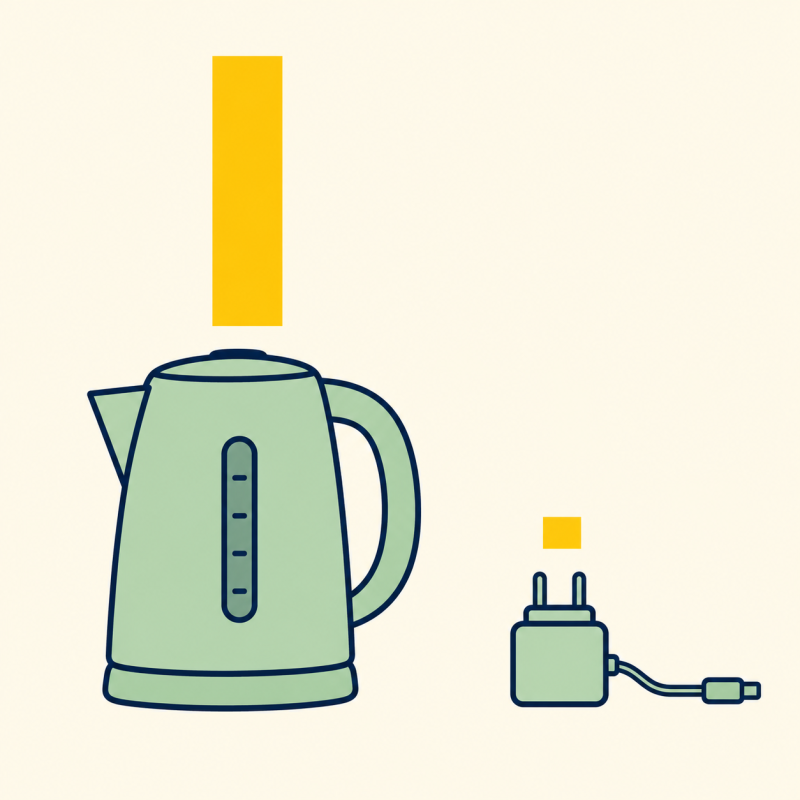
A phone charger left plugged in uses as much electricity as a kettle.
A charger with nothing attached draws a tiny amount, well under one watt. A kettle, while it is on, draws about 3,000 watts. Over a year, though, many small standby loads do add up.
Sources: Ofgem: energy bills, unit rates and standing charges; standard physics references. The 25p unit rate is a worked example only; actual tariffs vary.
Key takeaways
- A watt is a rate of using energy.
- P = V × I.
- A kilowatt-hour is power times time.
- Bills are charged by the kilowatt-hour.
Now you know.
Watts are how fast.
Kilowatt-hours are how much.
And your bill counts the second.
Last reviewed 3 Nov 2026
Where next?
Builds on
More in Electricity
-
Read
 How Things Work
Ohm's law
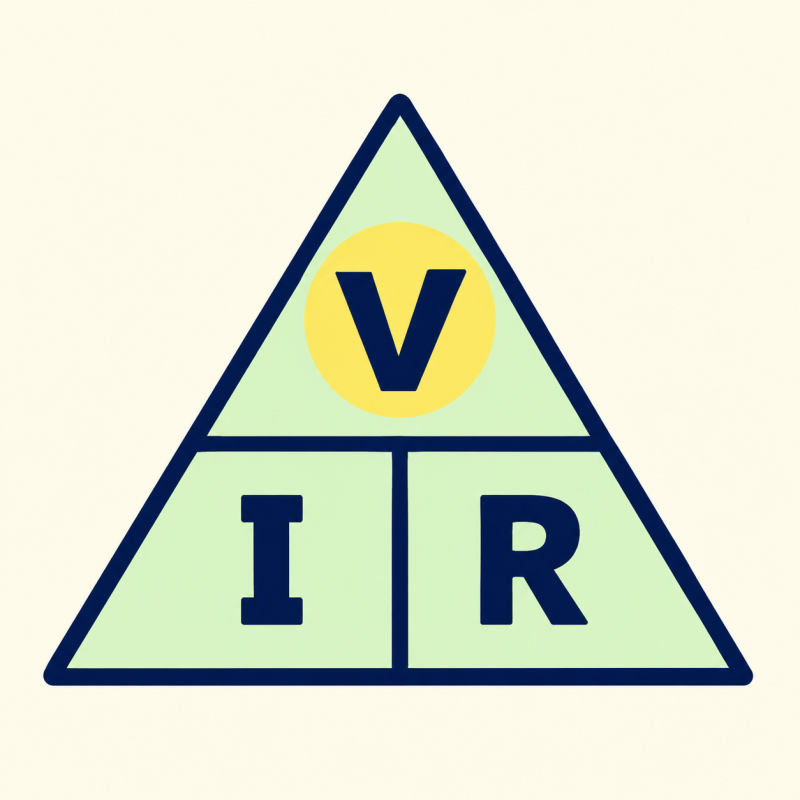
How Ohm's law links voltage, current and resistance in a simple rule, with a worked example you can check…
-
Read
 How Things Work
Household electricity
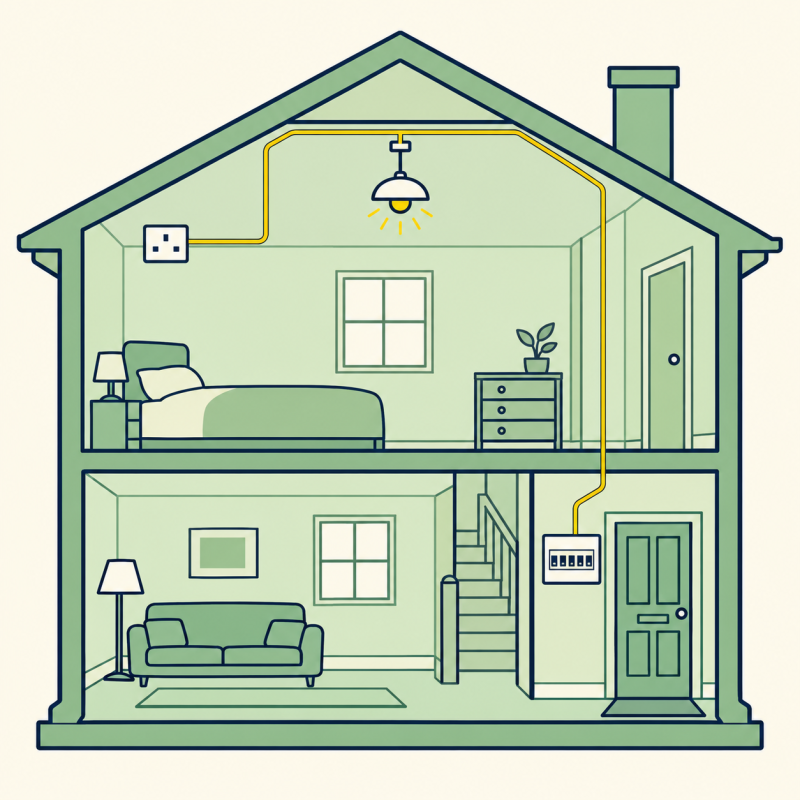
How household electricity works in the UK: mains voltage, alternating current, the consumer unit, circuit…
-
Read
 How Things Work
The National Grid
How the National Grid carries electricity from power stations over pylons to your home, why the voltage is so…