- Home
- How Things Work
- Electricity
- Household electricity
Household electricity
How electricity moves round your home, from the fuse box to the plug.
The short version
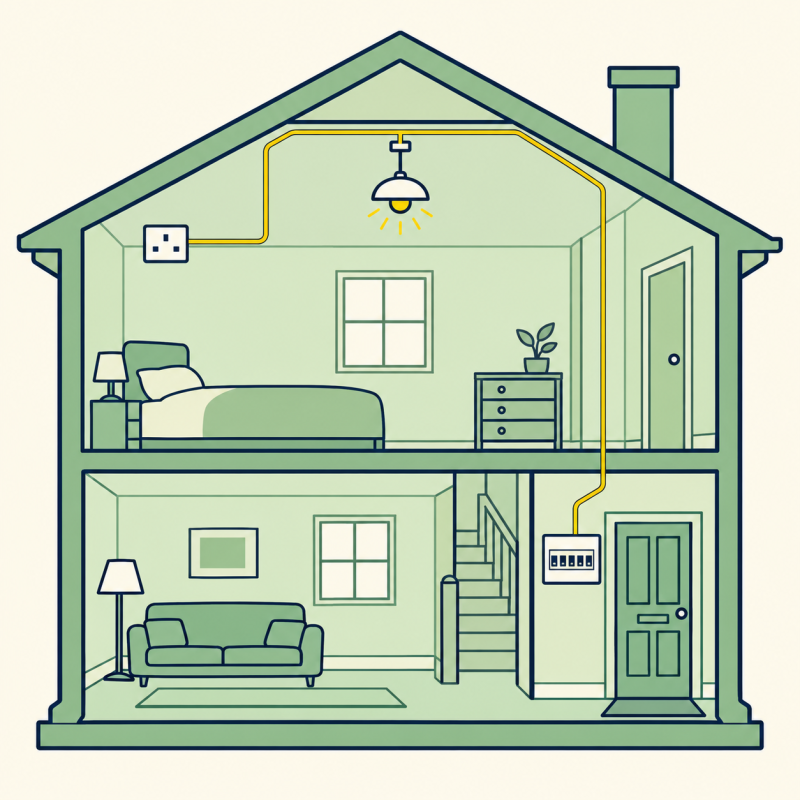
Mains electricity arrives at your home at 230 volts and passes through a fuse box, called a consumer unit, which splits it into circuits for sockets, lights and big appliances. Each circuit has a switch that cuts the power if too much current flows. It builds on what electricity is.
I always assumed the fuse box was where electricity was made safe.
It does not make it safe. It switches off when something goes wrong.
That is a different job.
Alternating current
Mains electricity in the UK is alternating current (AC). The push reverses direction 100 times a second, which is 50 cycles per second, called a frequency of 50 hertz. A battery by comparison gives direct current (DC), which flows one way. AC is used for mains because it is easy to change its voltage, which helps when sending power long distances.
The consumer unit and its circuits
The supply enters your home through the meter and then the consumer unit. Each circuit leaving it has its own switch, called a circuit breaker, that trips off if too much current flows. Typical circuits are:
- Sockets: often a ring of cable round the house, protected at 32 A.
- Lights: a lower rating, usually 6 A.
- Cooker or shower: their own circuits, because they need a lot of power.
Three pins, three jobs
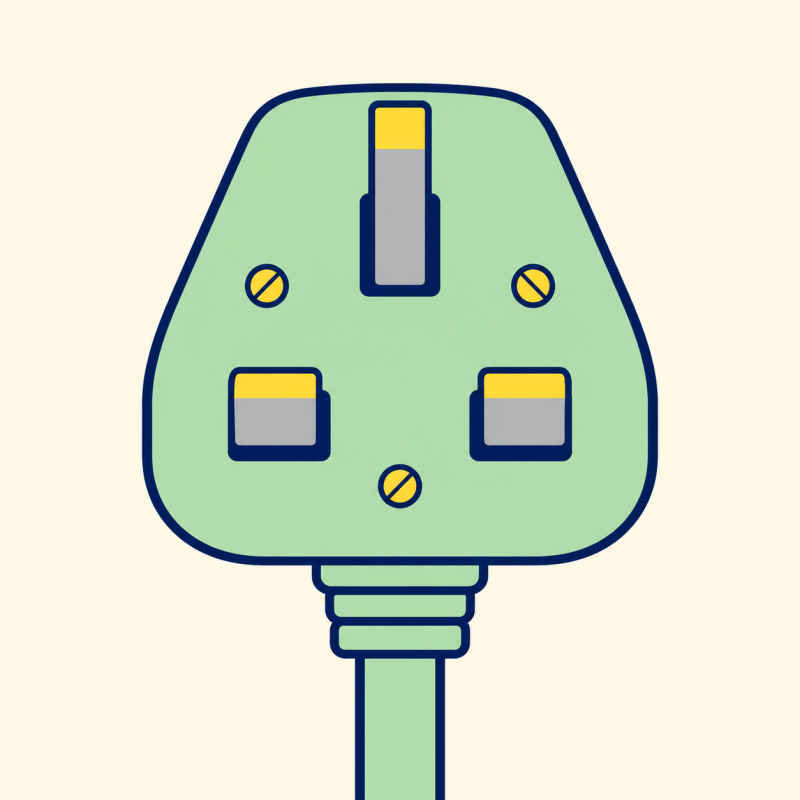
The live wire brings the push, the neutral wire completes the loop, and the earth wire is a safety path. If a fault makes an appliance’s metal case live, the earth wire provides a low-resistance path for fault current, helping a fuse, circuit breaker or RCD disconnect the supply. This reduces the chance that current flows through a person.
The plug itself has a small fuse in it, often 3 A or 13 A, that protects the cable of the appliance.
A device called an RCD (residual current device) in the consumer unit switches off in a fraction of a second if it notices that some current is leaking, for example through a person.
50 Hz
The frequency of UK mains electricity. The current changes direction 100 times every second.
Note: this is general information, not instructions for electrical work. Electrical work in a home should be done by a qualified electrician. Sources: Electrical Safety First: earthing and bonding; Electrical Safety First: plugs and fuses. UK mains is nominally 230 V at 50 Hz.
Key takeaways
- UK mains is 230 V alternating current at 50 Hz.
- The consumer unit splits it into circuits.
- Breakers and RCDs switch off when something goes wrong.
- A plug's earth pin is a safety path.
Now you know.
Mains is alternating current.
Breakers switch off when current is too high.
And the earth pin is the safety path.
Last reviewed 3 Nov 2026
Where next?
Builds on
More in Electricity
-
Read
 How Things Work
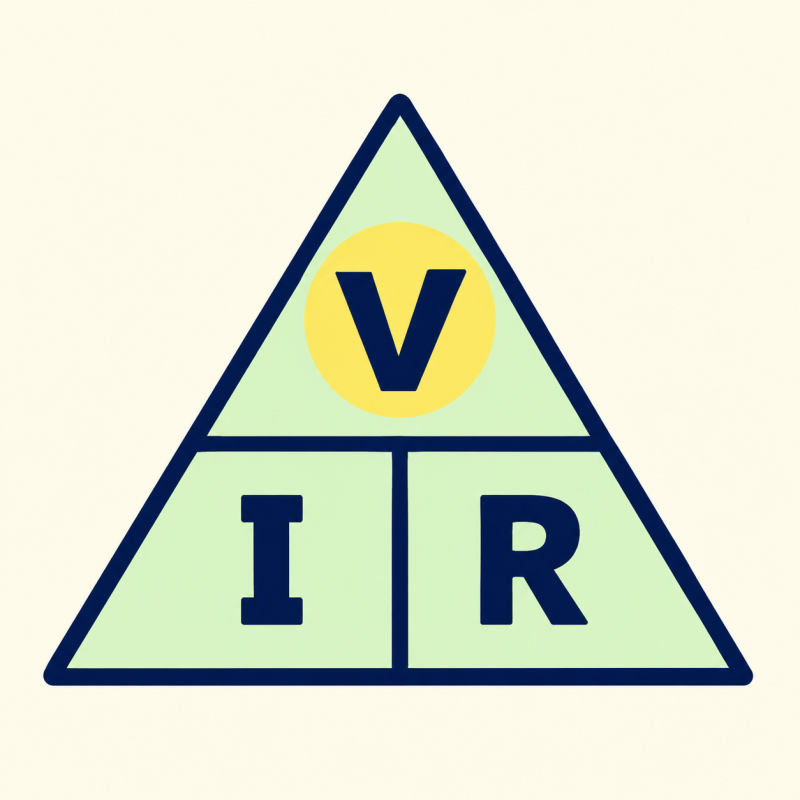
Ohm's law
How Ohm's law links voltage, current and resistance in a simple rule, with a worked example you can check…
-
Read
 How Things Work
Power and watts
What a watt is, how power relates to voltage and current, what a kilowatt-hour on your bill means and how to…
-
Read
 How Things Work
The National Grid
How the National Grid carries electricity from power stations over pylons to your home, why the voltage is so…