- Home
- Technology
- The cloud
- Data centres
Data centres
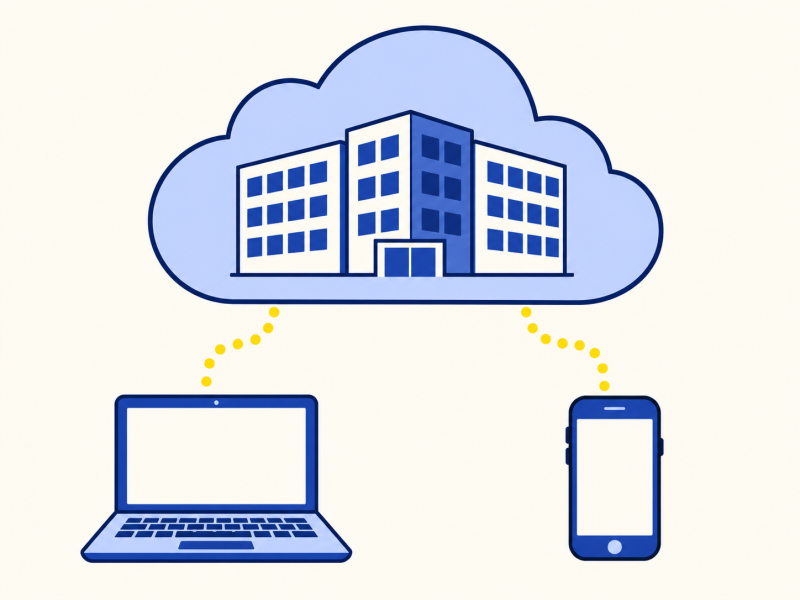
The buildings full of computers behind the cloud, and why they use so much power and water.
The short version
A data centre houses servers, power and cooling systems, and network links. Backup equipment can reduce outages, but resilience varies between sites. Servers and cooling use a lot of electricity. It builds on the cloud.
I always imagined a data centre as one giant computer.
It is thousands of ordinary-looking computers, in racks, doing small jobs.
Like a library of machines.
What is inside
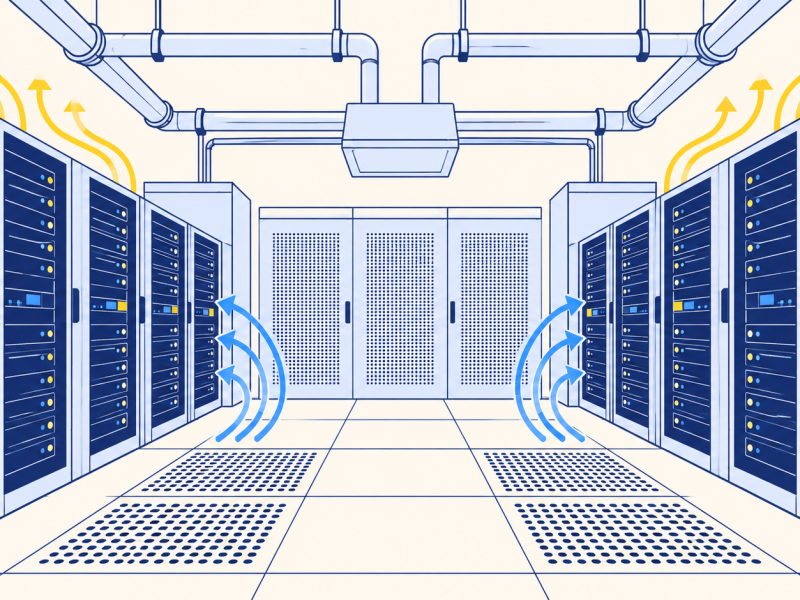
Rows of tall metal racks hold flat computers, called servers, stacked like pizza boxes. Cables link them to each other and to the outside world through several separate connections.
There is no keyboard or screen: the machines are run from afar. Engineers go in to replace parts.
Power and cooling
Computers turn almost all the electricity they use into heat. A building full of them needs constant cooling, using chilled air or water. Cooling designs vary. Some facilities use outside air, chilled water or evaporative cooling; water use depends on the system and local climate. Some sites also reuse waste heat to warm nearby buildings.
For power cuts, there are batteries that cover the first moments and generators, often diesel, that take over after. Some racks have two power feeds, each connected to separate systems, so one fault need not cut power.
About 1.5%
The IEA estimated that data centres used around 1.5% of global electricity in 2024 (415 terawatt-hours). Demand has since continued to grow. IEA: Energy and AI.
Key takeaways
- A data centre is a building of servers.
- Backup power and redundant connections are common design measures, but not universal.
- Heat is the main problem.
- They use a rising share of the world's electricity.
Now you know.
It is thousands of servers.
Everything has a backup.
The problem is heat.
Last reviewed 3 Nov 2026