The short version
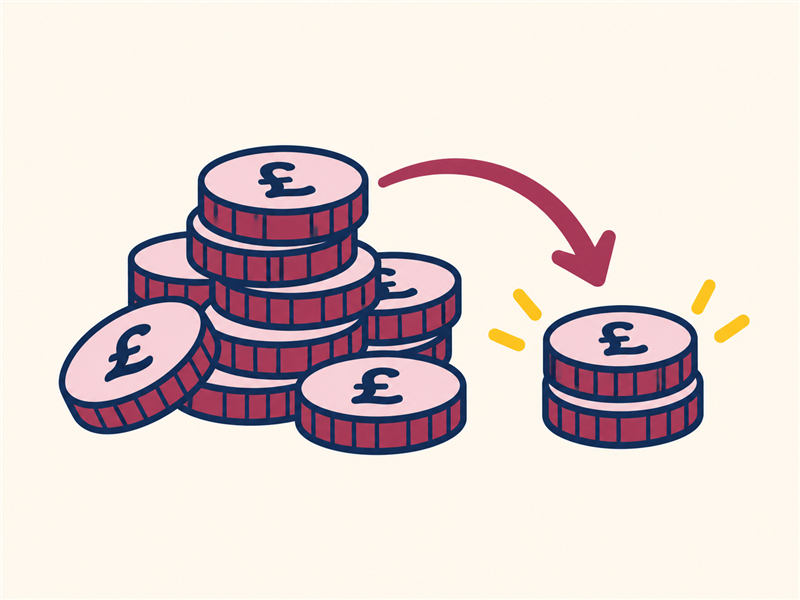
Compound interest is interest on interest. Each time interest is added to your pot, the next round of interest is worked out on the bigger amount. Growth starts slowly and then speeds up. It works the same way on debts, in the other direction. It builds on interest.
I always thought 5% a year meant the same £50 every year on £1,000.
It does only if you take the interest out.
Leave it in and the 5% is worked out on a bigger number each year.
A pot that feeds itself
Start with £1,000 at 5% a year. After one year it earns £50, so the pot is £1,050.
In year two the 5% is worked out on £1,050, not £1,000. That earns £52.50, and the pot is £1,102.50. In year three it earns £55.13 and reaches £1,157.63.
Each year's interest is a little larger than the last, because the pot it is worked out on is larger. That small extra amount, repeated, is what makes the snowball.
What £1,000 becomes at 5% a year
Nothing is added after the start, and the interest is left in.
Time matters more than the rate
The first ten years add £629. The last ten add £1,669, almost three times as much, from the same pot and the same rate. The extra growth comes from the interest piling up, not from anything you did.
This is why people say that time is the main ingredient. A pot left for longer gets more of the later, faster growth.
12 years
A rough guide called the rule of 72: divide 72 by the yearly rate to estimate how long a pot takes to double. At 6% that is 72 ÷ 6 = 12 years.
The same snowball on a debt
Debts grow in the same way. If interest on a card balance is added each month and you do not pay it off, the next month's interest is worked out on the debt plus the interest. A balance can grow faster than people expect.
That is also why paying a debt off early saves more than the date suggests: you stop the snowball.
Note: this explains how it works in general. It is not advice for your situation. For a decision about your money, check an official source or ask a qualified professional. The figures are examples at a fixed 5% a year, not a forecast.
Sources: MoneyHelper, guide to compound interest and savings growth. The worked examples are calculations using the stated fixed rate.
Key takeaways
- Compound interest is interest on interest.
- Growth is slow early and faster later.
- Time in the pot matters as much as the rate.
- Debts compound too, in the other direction.
Now you know.
Interest can earn interest.
Growth speeds up.
Time is the secret ingredient.
Last reviewed 3 Nov 2026