- Home
- Technology
- Digital cameras
- Phone camera
How a phone takes a photo
Why a camera the size of a pea takes such good pictures: mostly it is the software.

The short version
A phone camera has a very small lens and sensor, which collect little light. To make up for it, the phone takes several photos at once, in a fraction of a second, and its processor combines them into one cleaner picture. It builds on digital cameras.
I always thought the lens made my phone photos good.
Mostly, it is the maths after.
Your phone takes many photos and gives you one.
Small is hard
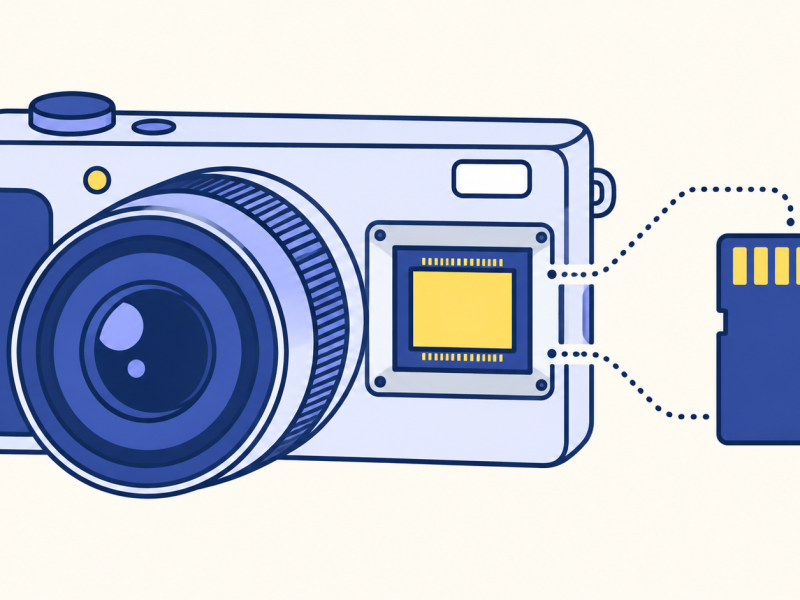
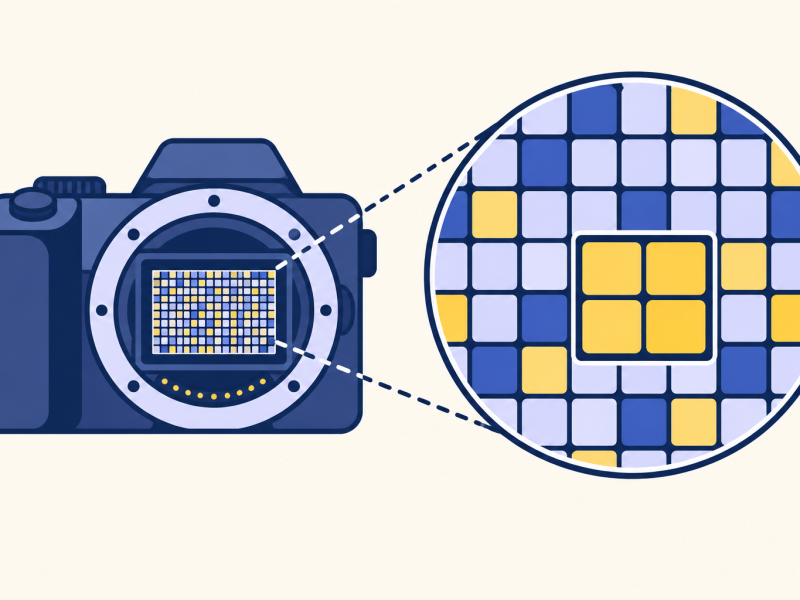
A big camera has a big lens and sensor that gather plenty of light. A phone must fit in your pocket, so its sensor is smaller than a fingernail. In dim light it collects very little and the picture looks speckled.
Many shots, one photo
When you press the button, the phone has often already taken several frames. It lines them up, picks the sharpest, averages away the speckle, and takes the bright parts from a quick shot and the dark parts from a longer one. This is called computational photography.
Night mode takes this furthest: it takes many frames over a second or two and merges them, so a dim scene looks clearer than your eye saw it. Portrait mode estimates how far away things are, using two lenses or software, and blurs the background to imitate a big lens.
Note: because software builds the photo, two phones can make quite different pictures of the same scene.
Key takeaways
- A phone sensor is tiny and gathers little light.
- The phone combines several frames into one.
- Night mode and portrait mode are software.
- Different makers' software gives different looks.
Now you know.
The sensor is tiny.
The phone takes many and combines them.
Software does a lot of the work.
Last reviewed 3 Nov 2026