- Home
- Technology
- How a computer works
- Processor
What a processor does
The chip at the heart of every computer, and what billions of tiny switches add up to.

The short version
A processor, or CPU, runs program instructions at great speed, using switches called transistors. Each instruction is a small operation, such as adding two numbers. A clock speed counts cycles per second; it does not directly say how many instructions finish in that time. It builds on how a computer works.
I always thought a faster processor was cleverer.
It is not cleverer. It does the same small steps, only faster.
Speed is the whole trick.
Fetch, decode, execute
Every instruction goes through the same three steps. The processor fetches it from memory, decodes it to see what it asks for, and executes it, for example by adding two numbers or copying one from memory to another place.
A program is a very long list of such tiny instructions. A photo filter, a game and a web page are built the same way, only with different lists.
Clock speed and cores
The processor works to a beat, called the clock. A clock speed of 3 GHz means 3 billion beats a second. A clock beat helps synchronise the chip. An instruction may take several cycles, while some cores can complete more than one instruction in a cycle.
Modern chips have several cores, each a processor in its own right. Several cores can work on separate threads at once. The benefit depends on whether software can split its work; a task with steps that must happen in order cannot be fully shared out.
Tens of billions
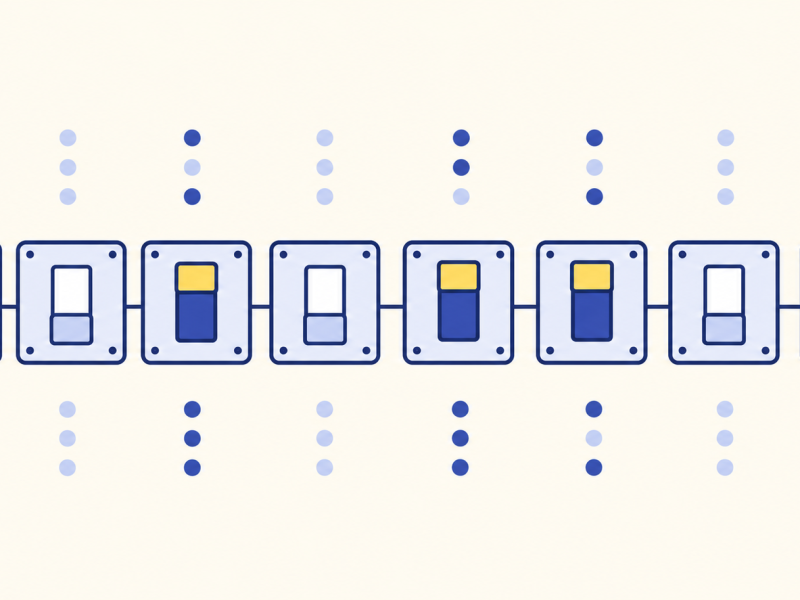
The number of transistors in some modern chips. Each one is a switch with nothing moving, which turns a tiny current on or off.
Transistors
A transistor is a switch controlled by electricity, not by a finger. Connecting a few makes a logic gate, which answers simple questions such as "are both of these on?". Millions of gates joined together can add, compare and move numbers, and that is all a processor does.
Source: Intel on CPU clock speed explains why cycles and instructions are not one-to-one.
Key takeaways
- A processor fetches, decodes and executes instructions.
- Each instruction is tiny.
- Clock speed is cycles per second, not a direct instruction count or performance score.
- More cores can work on more jobs at once.
Now you know.
A processor does tiny steps.
It does billions of them a second.
Transistors are the switches.
Last reviewed 3 Nov 2026